
George III sterling silver Warwick Vase
George III sterling silver Warwick Vase
9692
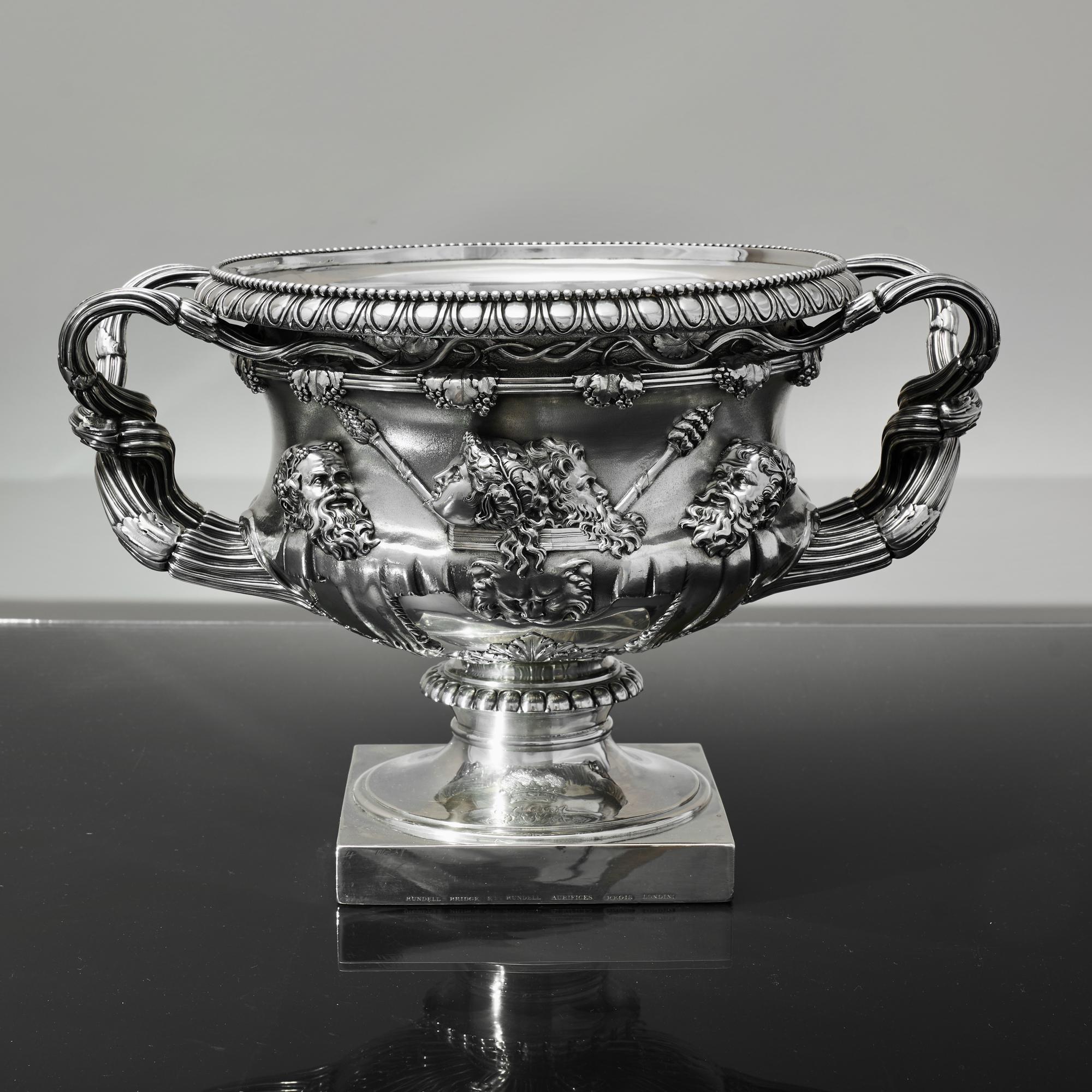
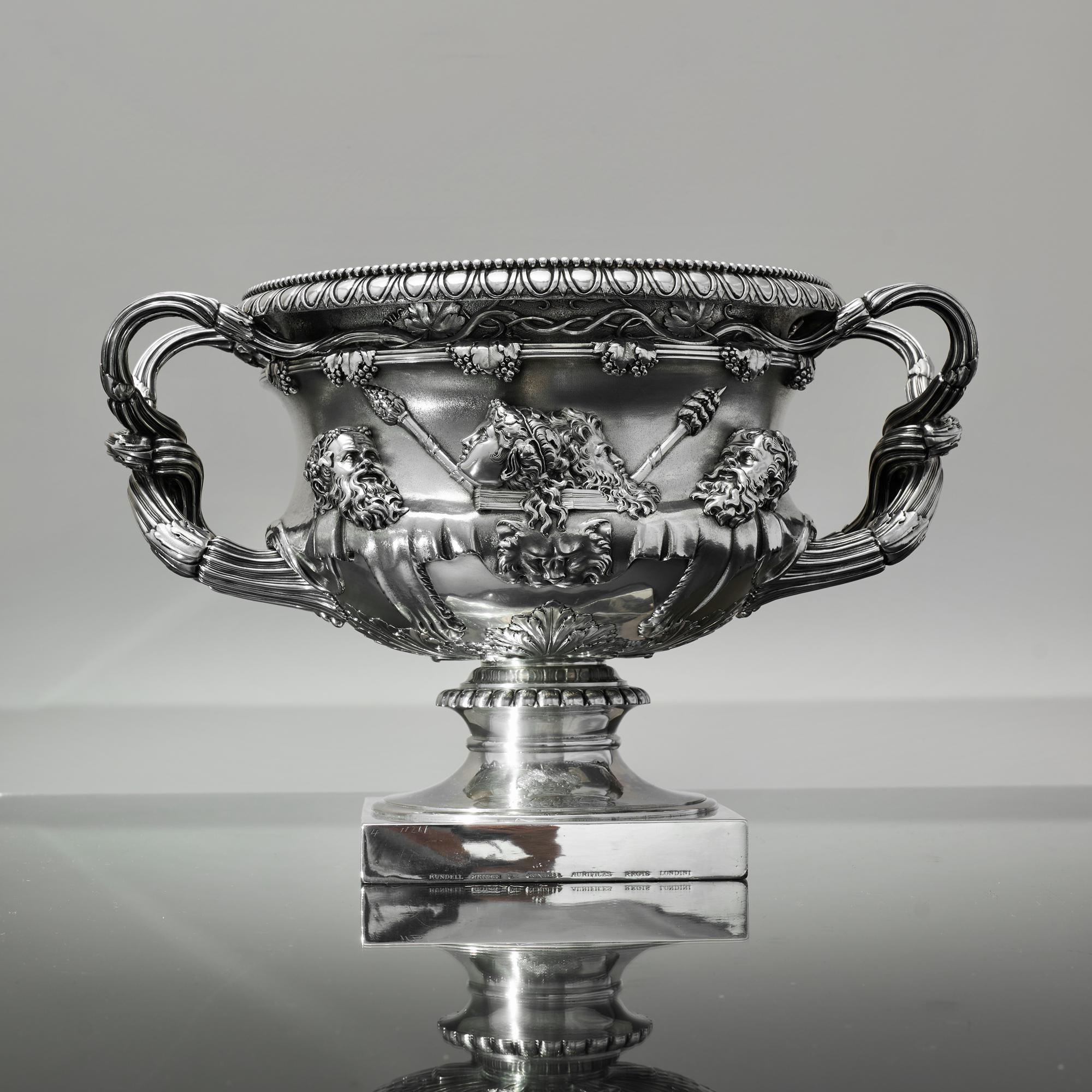
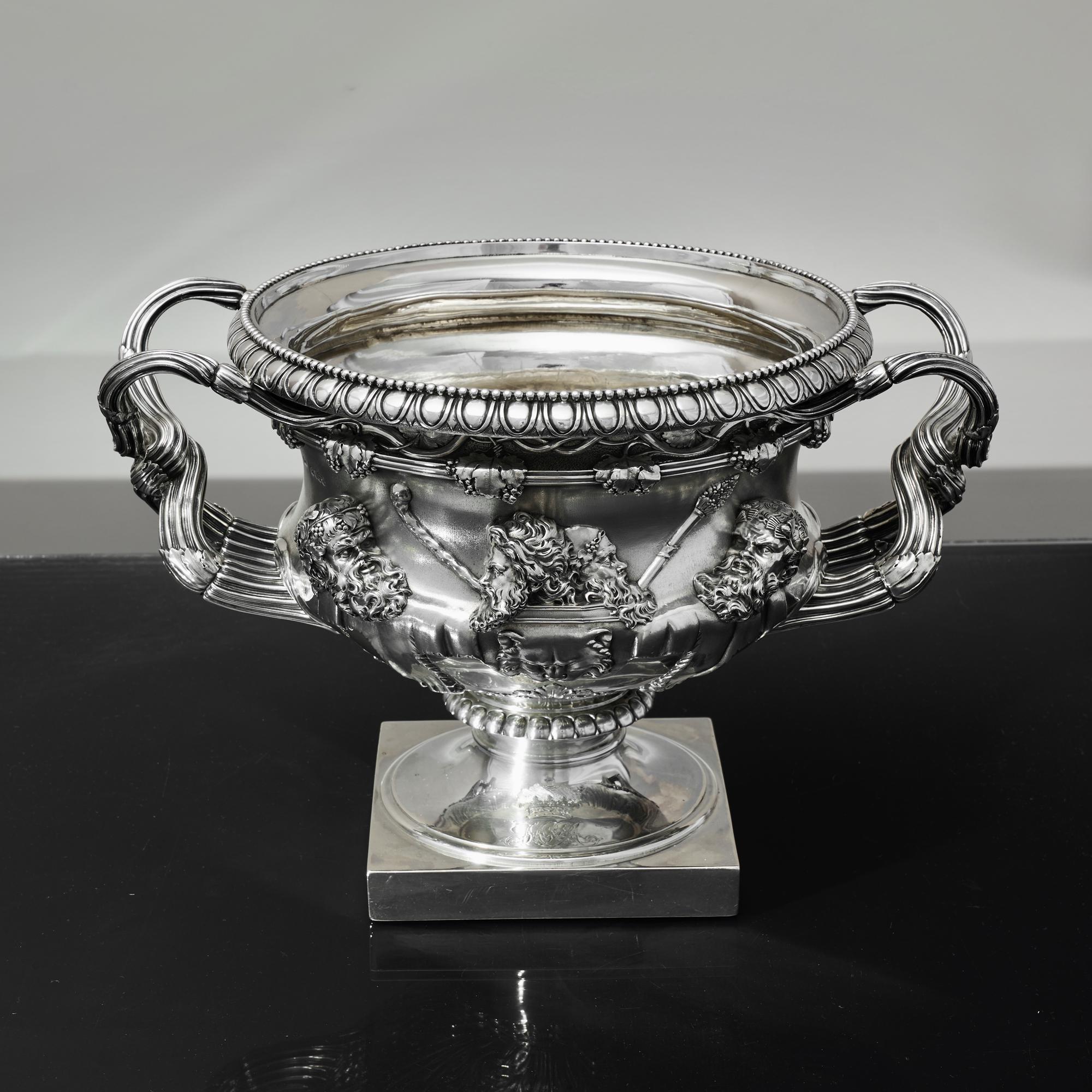
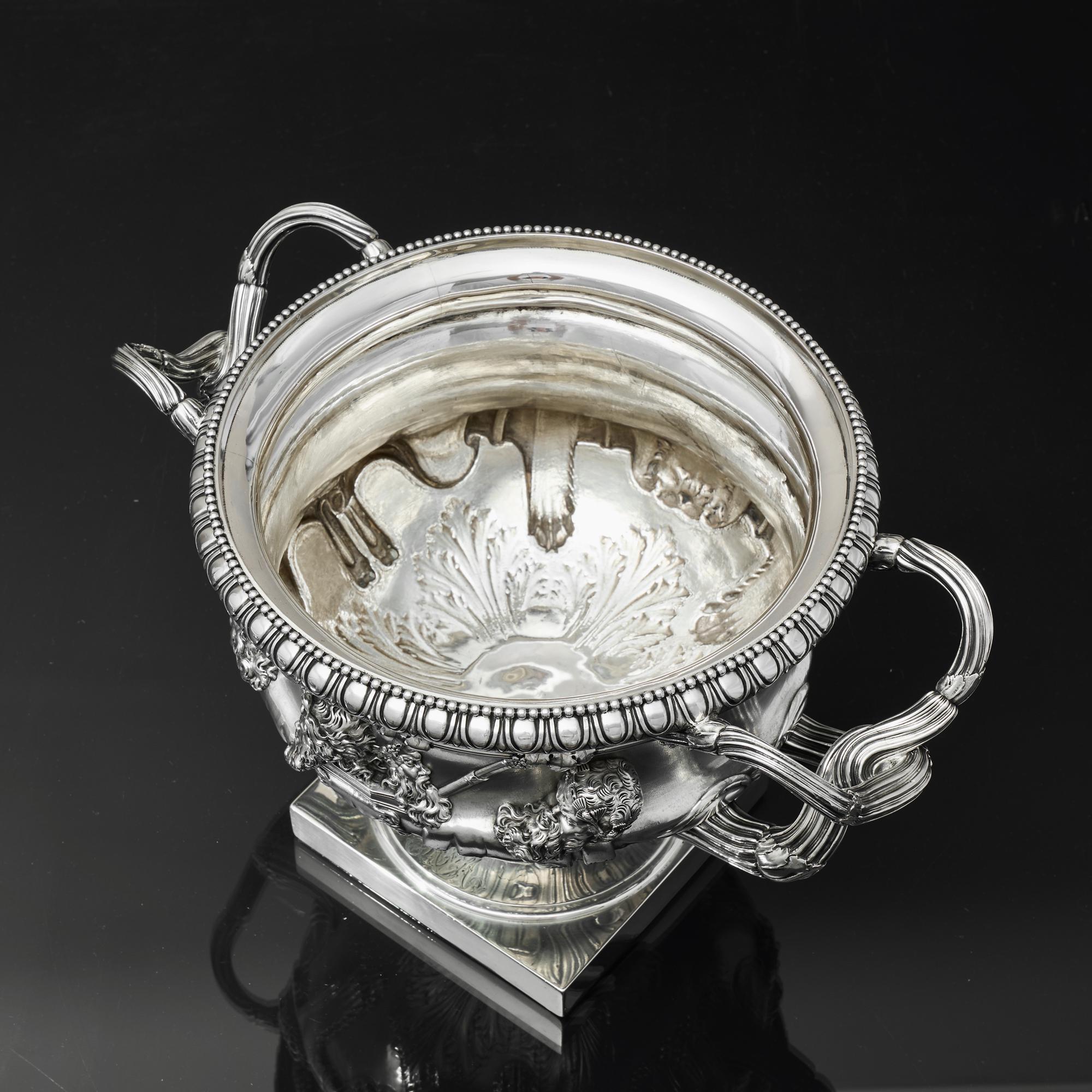
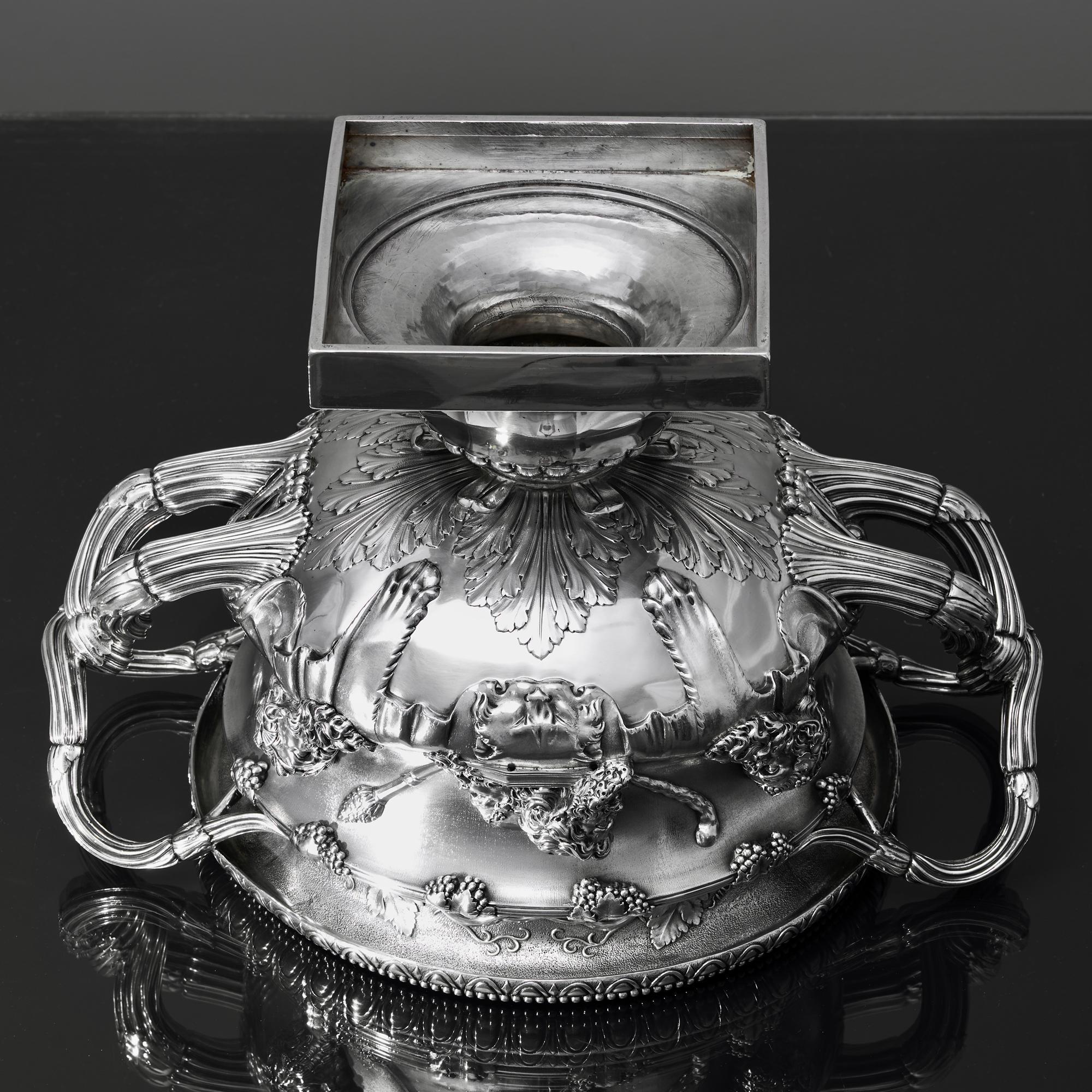
An impressive antique sterling silver recreation inspired by the original Roman Warwick Vase, a grand marble vessel discovered in the 1770s at Hadrian's Villa in Tivoli, Italy.
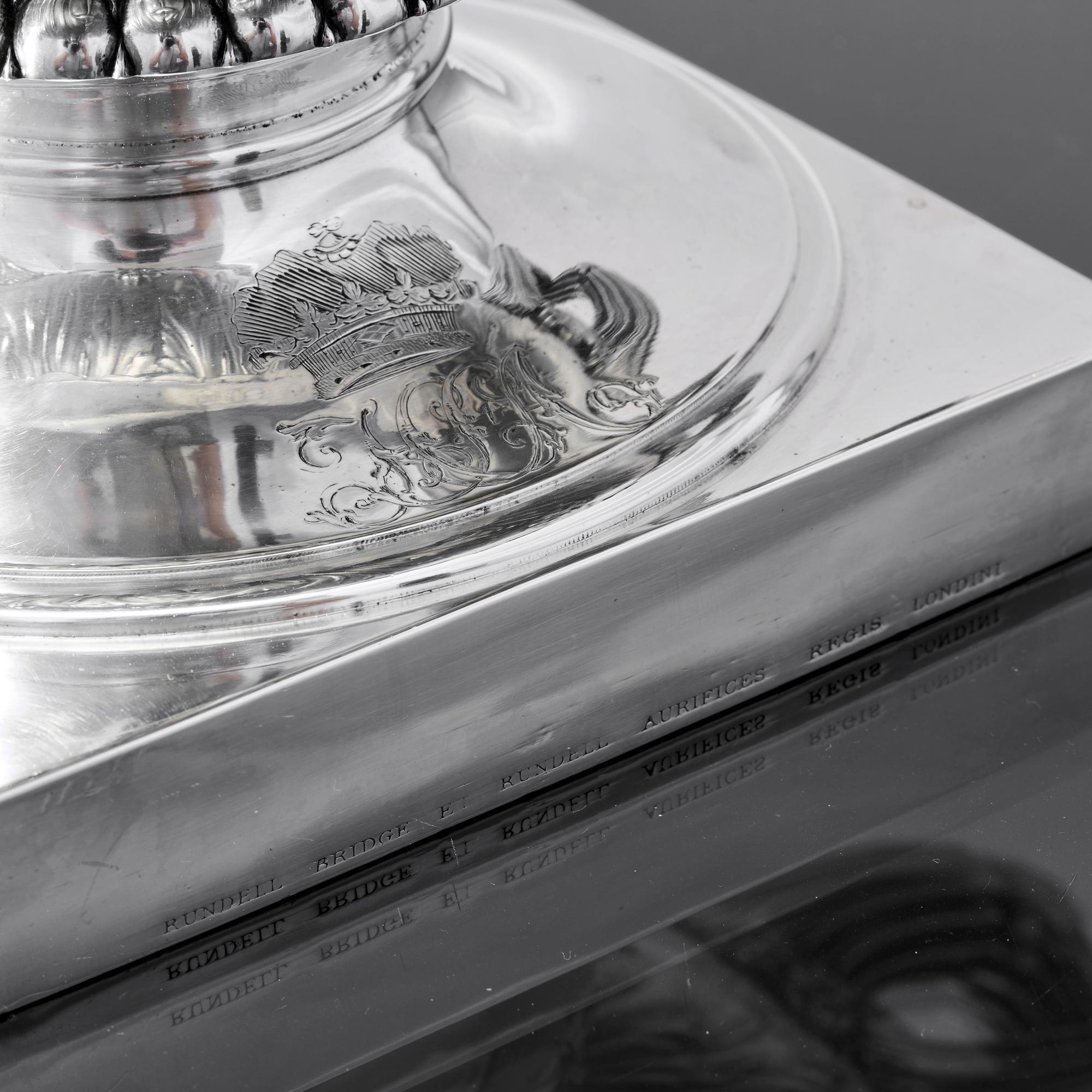
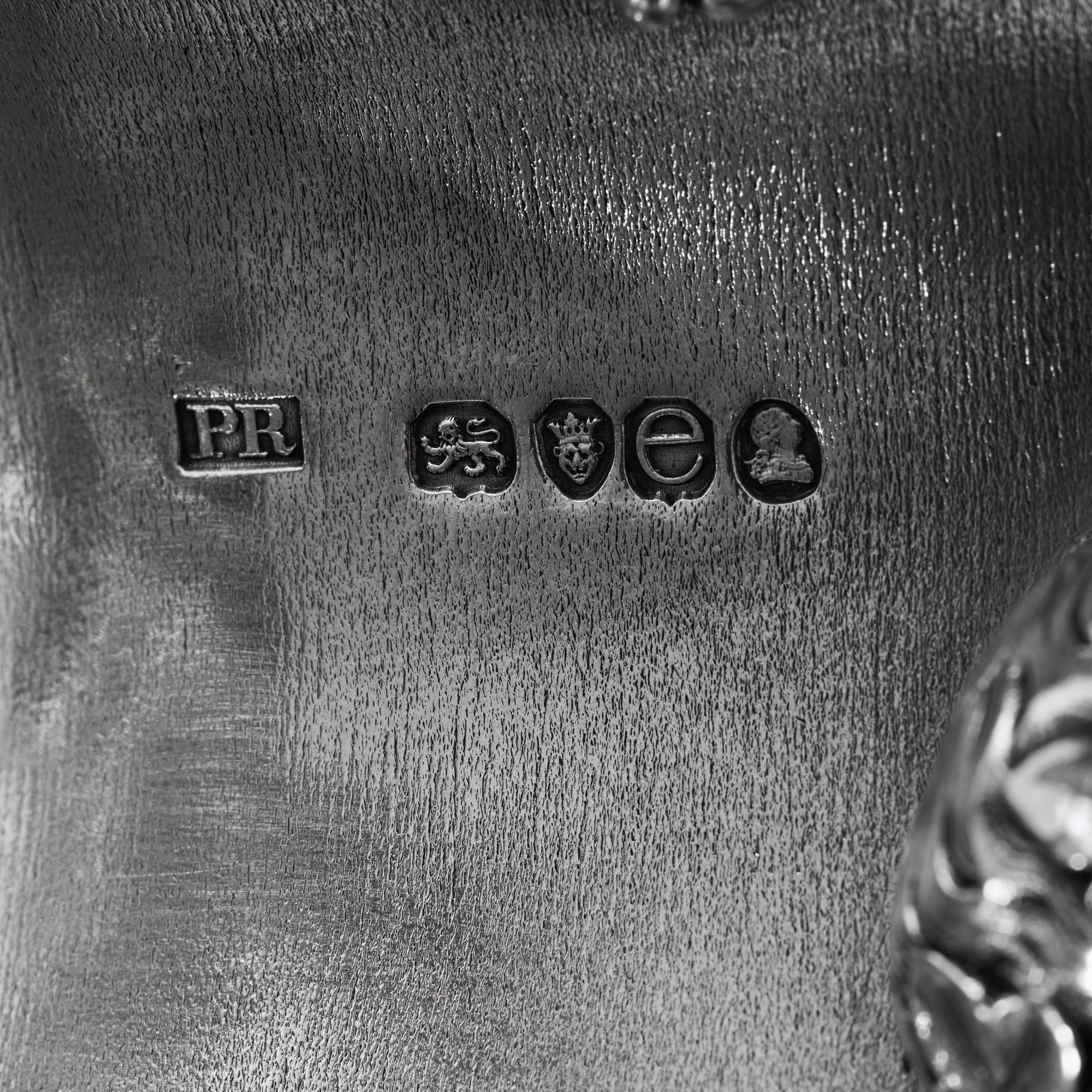
It was made by Philip Rundell, one of England's finest silversmiths, in London in 1820.
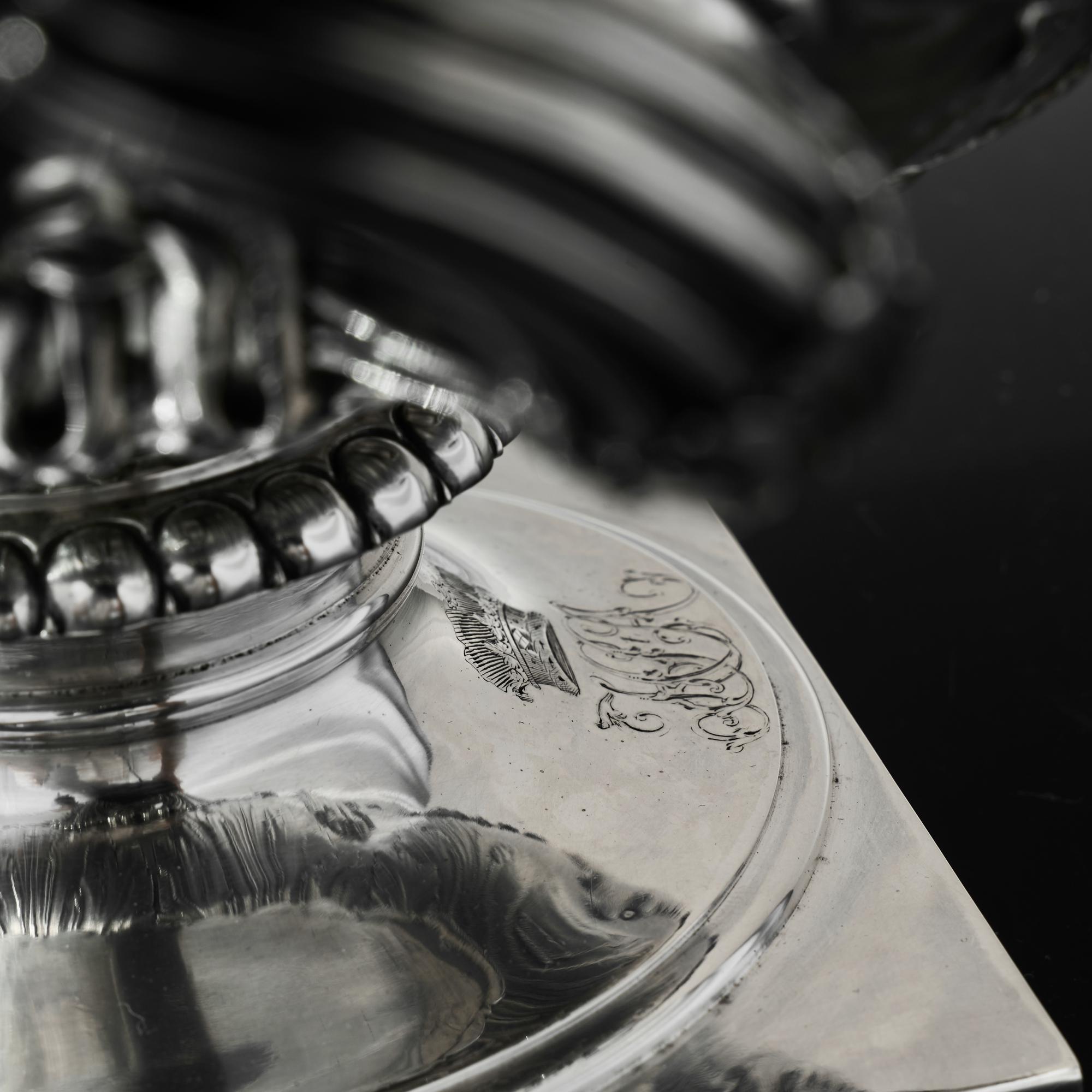
The monogram is that of Harriet, Duchess of St Albans, wife of William Aubrey de Vere, 9th Duke of St Albans, widow of Thomas Coutts, the banker. She made her first appearance on the stage at Ulverstone, 16 October 1787, in a farce The Spoiled Child. Her debut in London was as Lydia Languish in Sheridan's Rivals, 1975, and her last appearance as Audrey in As You Like It, 1815. She married Thomas Coutts, 18 January 1815 at St Pancras and as this marriage was, it seems illegal, they were married by license at the same church last on 12 April. On his death, 24 February 1822, Coutts left her his universal legatee. The Morning Post recorded that "some time previous to his death he settled upon Mrs C the sum of £600,000 with the house in Stratton Street, all the plate, linen & c.- the service of plate is said to be the most valuable in any of the country- together with the house in Highgate, and all its appurtances...the whole makes her the richest widow in the United Kingdom". The Duchess was renowned for her extravagance and also for her generosity to the poor and needy, though the popular press continually attacked her. When she married the Duke of St Albans on 16 June 1827, he was 26 and she was 50. On her death she left the bulk of her property to Angela, her stepdaughter, 5th and youngest daughter of Sir Francis Burdett Bart, by Sophia, 3rd daughter of Thomas Coutts by his first wife, and afterwards suo jure Baroness Burdett-Coutts (died in 1906). She left, however, £10,000 per year, the house in Piccadilly, and Holly Lodge to her 2nd husband.
The original was unearthed by Scottish antiquarian Gavin Hamilton and soon acquired by Charles Greville, who displayed it at Warwick Castle - hence its name.
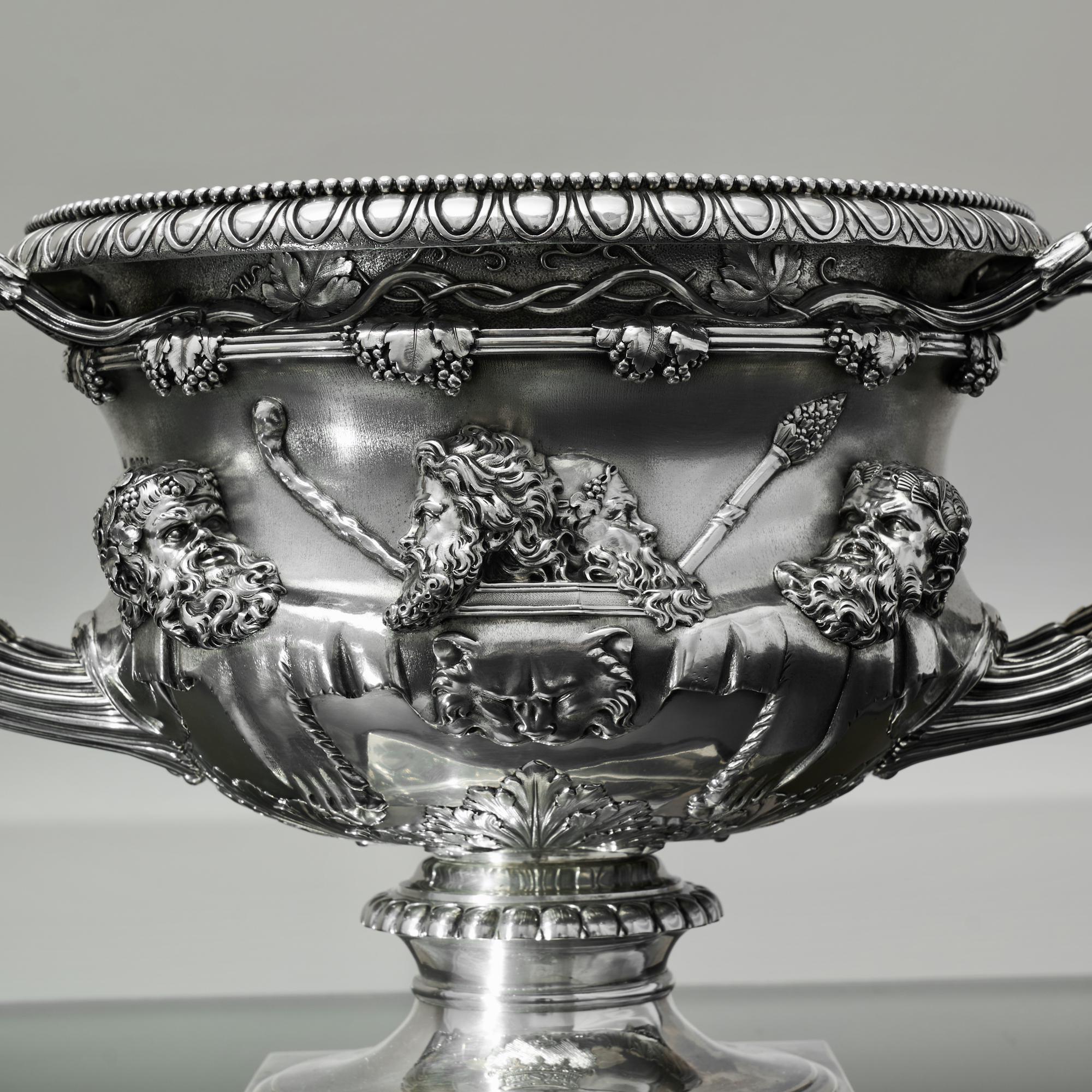
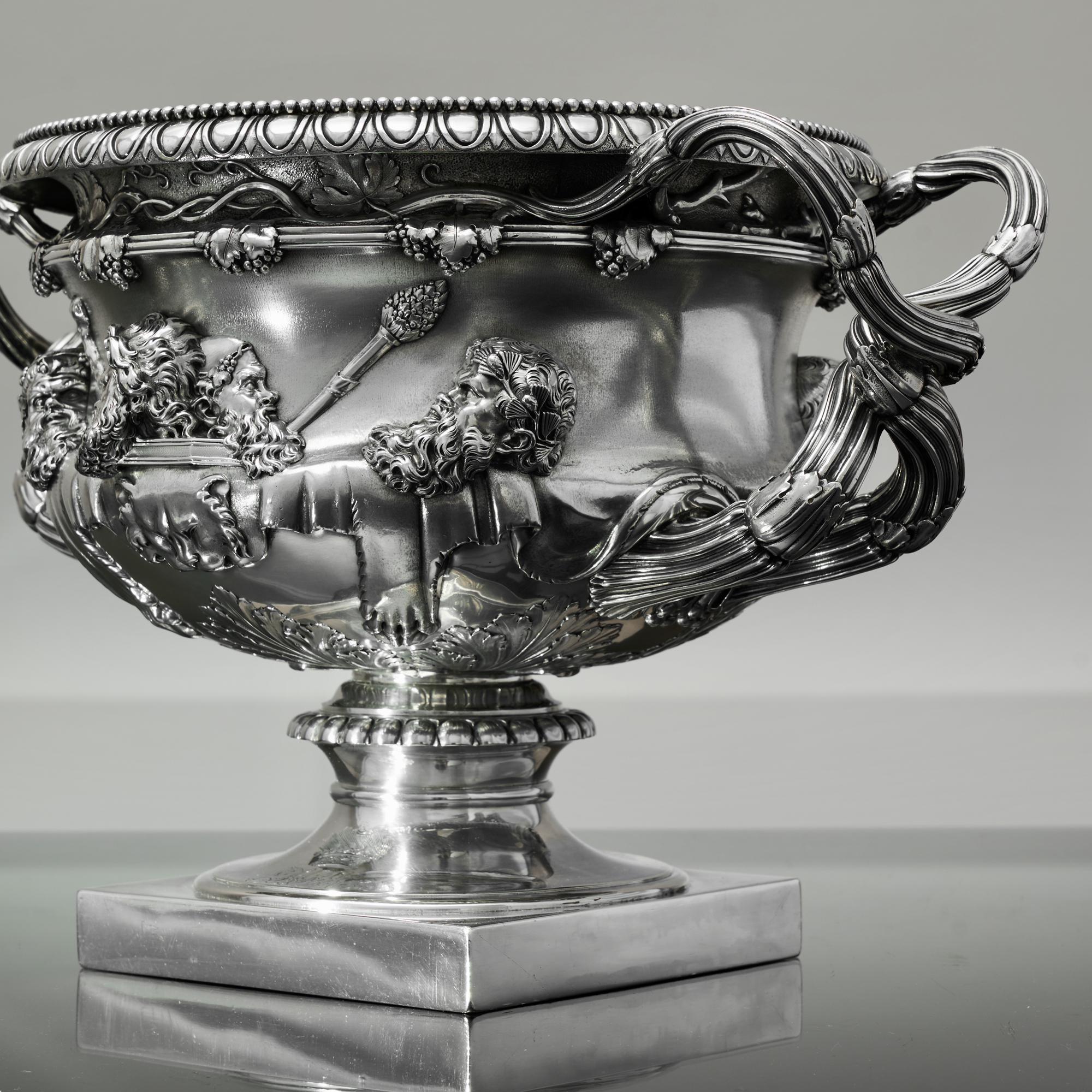
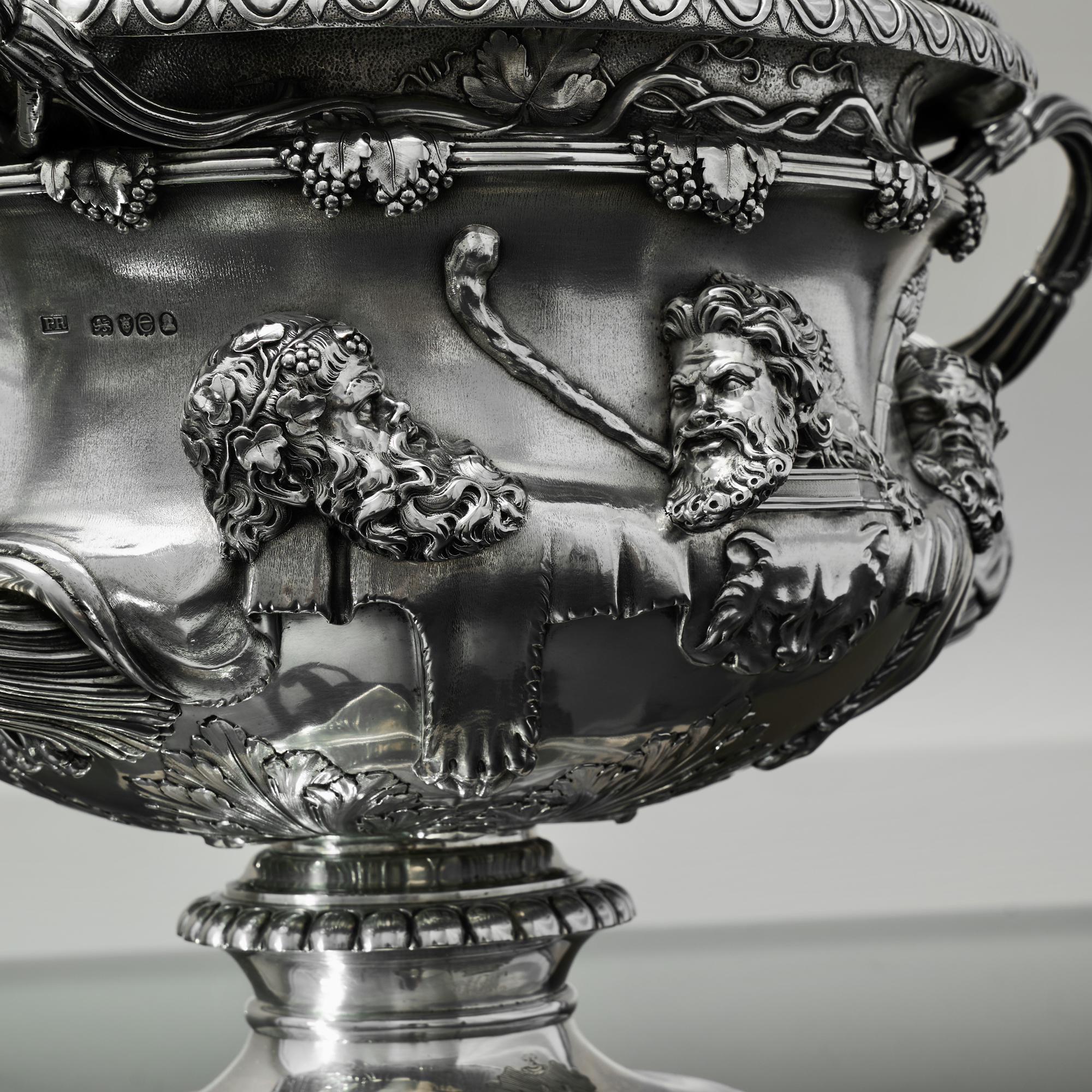
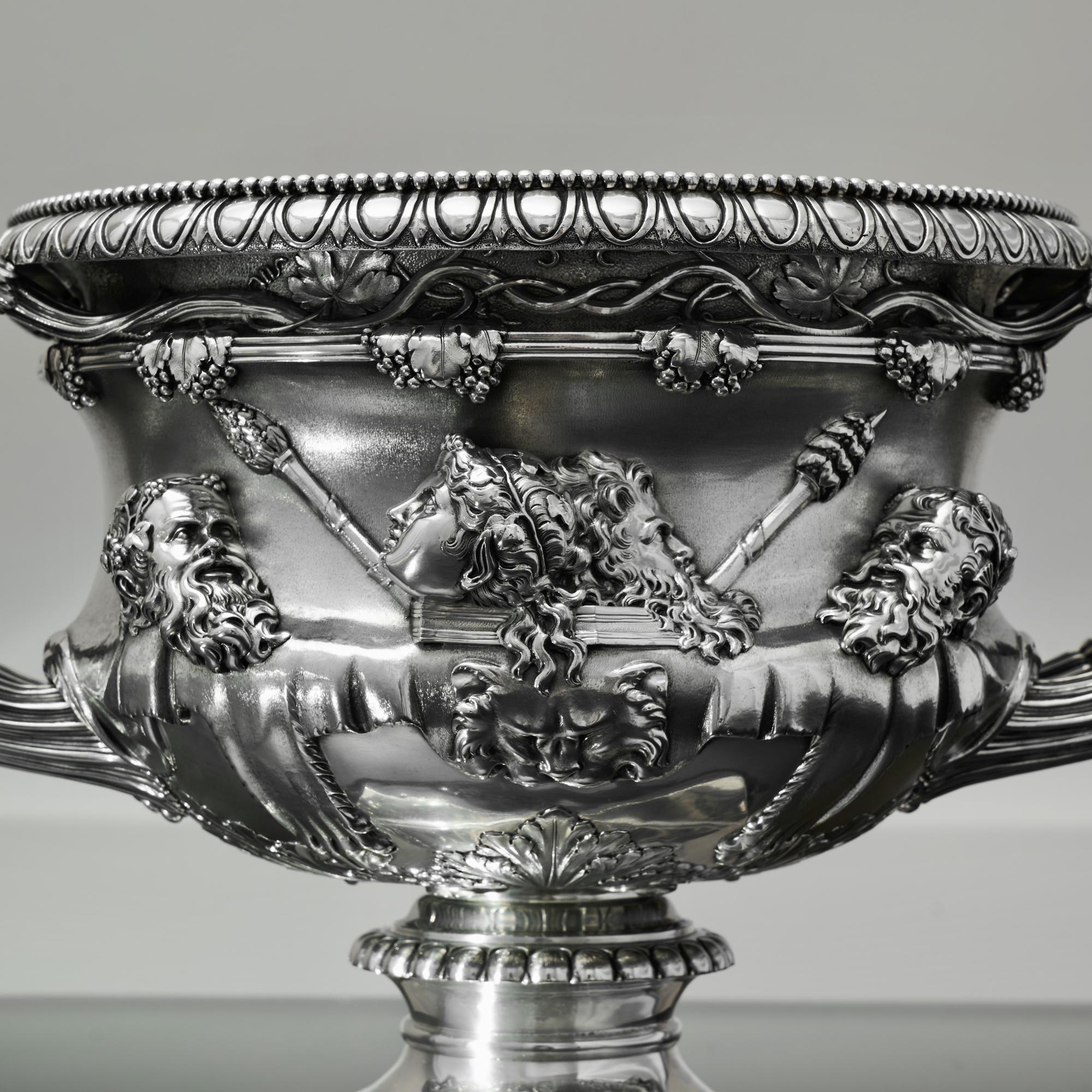
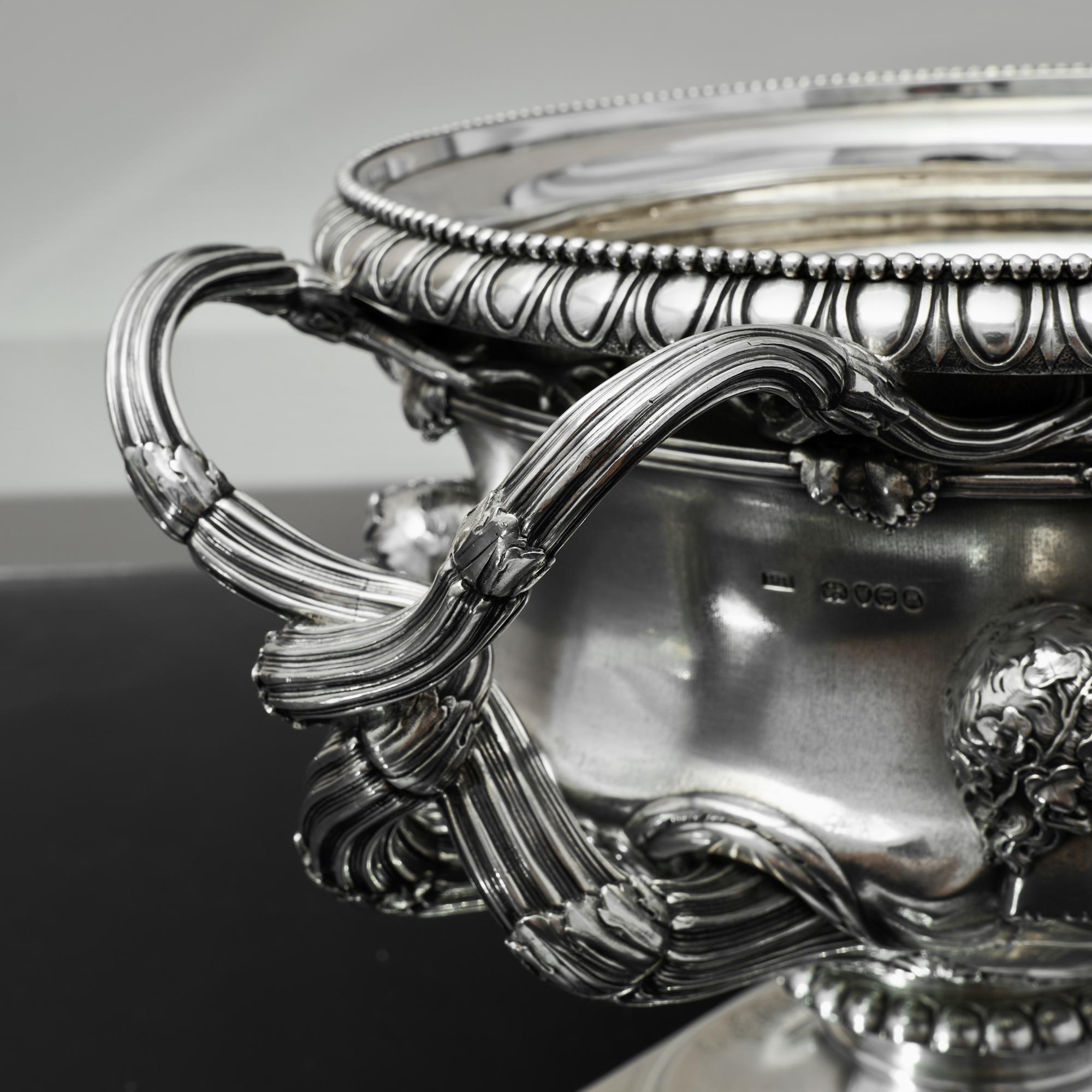
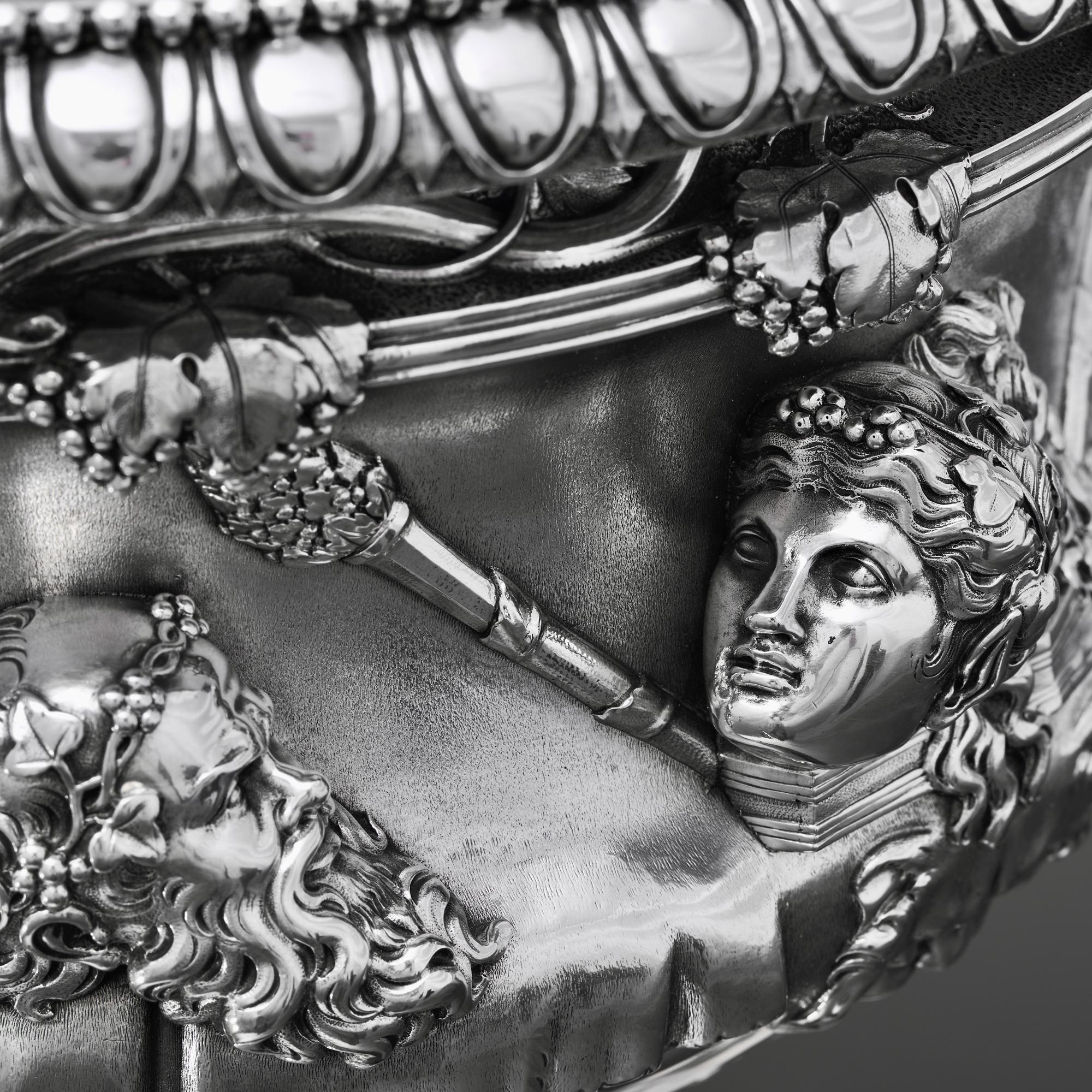
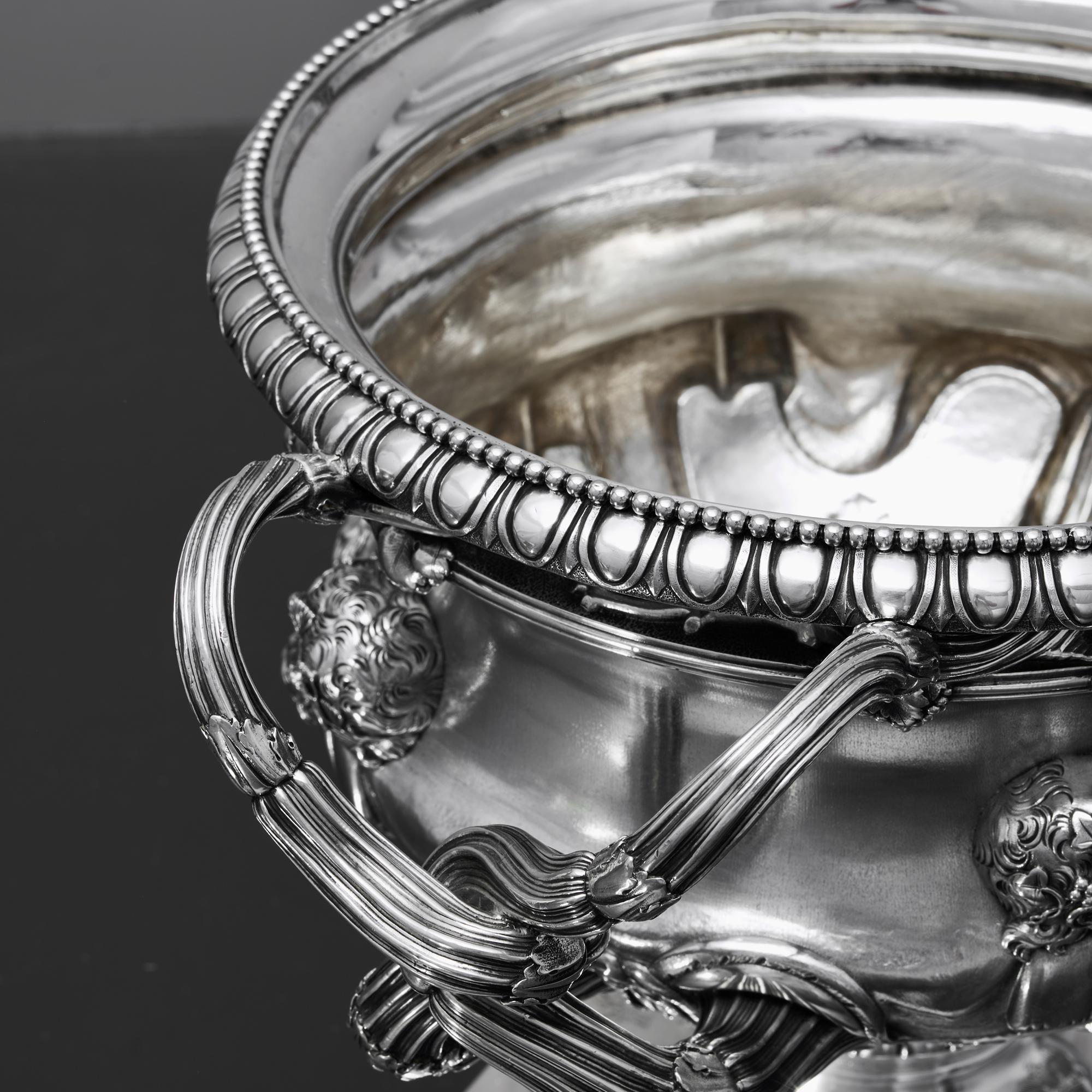
The popularity of the Warwick Vase surged during the 18th and 19th centuries, a time when neoclassical tastes dominated European art and design. Its striking form, featuring Bacchus masks, grapevine motifs, and twisted vine handles, made it a favourite model for reproduction, particularly in silver.
Silver versions were typically commissioned as trophies or presentation pieces, often given as prizes for sporting or civic achievements. Renowned British silversmiths such as Paul Storr, Benjamin Smith and Philip Rundell - who created this one - created some of the most notable examples during the early 19th century. These pieces maintained the grand scale and ornate detail of the original while showcasing the silversmith's technical skill.
Throughout the Victorian era and into the 20th century, the silver Warwick Vases continued to be produced in various sizes, serving decorative as well as ceremonial functions. Today, these silver vases are highly prized by collectors and institutions alike, admired for their craftsmanship and classical heritage.
Silver Warwick Vases represent a blend of Roman antiquity and British artistic tradition, echoing centuries of aesthetic and cultural appreciation.
This magnificent silver Warwick Vase is not available to purchase online. Please contact us if you would like more information or are interested to buy it.
Dimensions:
1820
London
Excellent
YOU MIGHT ALSO LIKE








. She left, however, £10,000 per year, the house in Piccadilly, and Holly Lodge to her 2nd husband. The original was unearthed by Scottish antiquarian Gavin Hamilton and soon acquired by Charles Greville, who displayed it at Warwick Castle - hence its name.The popularity of the Warwick Vase surged during the 18th and 19th centuries, a time when neoclassical tastes dominated European art and design. Its striking form, featuring Bacchus masks, grapevine motifs, and twisted vine handles, made it a favourite model for reproduction, particularly in silver.Silver versions were typically commissioned as trophies or presentation pieces, often given as prizes for sporting or civic achievements. Renowned British silversmiths such as Paul Storr, Benjamin Smith and Philip Rundell - who created this one - created some of the most notable examples during the early 19th century. These pieces maintained the grand scale and ornate detail of the original while showcasing the silversmith's technical skill.Throughout the Victorian era and into the 20th century, the silver Warwick Vases continued to be produced in various sizes, serving decorative as well as ceremonial functions. Today, these silver vases are highly prized by collectors and institutions alike, admired for their craftsmanship and classical heritage.Silver Warwick Vases represent a blend of Roman antiquity and British artistic tradition, echoing centuries of aesthetic and cultural appreciation.This magnificent silver Warwick Vase is not available to purchase online. Please contact us if you would like more information or are interested to buy it.)